
Lose Nothing: The Parts of Your Documents Most AI Tools Drop
Most AI tools read the easy 80% of your document and quietly drop the rest — the tables, the drawings, the second language. Sebtember is built on one principle: lose nothing.
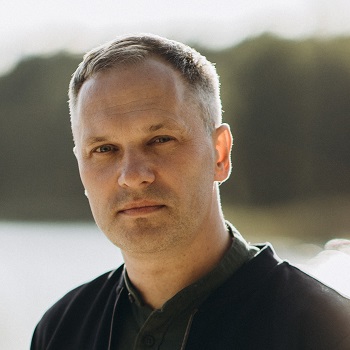 Vaidas SaltenisFounder, Sebtember
Published 1 July 2026. Every claim below was last re-verified against the deployed pipeline on 31 October 2026 — the pipeline changes often, and a comparison that isn't re-checked stops being true.
Ask an AI tool to read a document and it will almost always give you an answer. What it rarely tells you is how much of the document it actually understood.
Most tools read the easy part — the flowing paragraphs — and quietly drop the hard parts: the pricing table, the dimensioned drawing, the performance curve, the clause written in another language. You don't get an error. You get a confident answer built on a fraction of the file.
Sebtember is built on the opposite principle. Lose nothing.
What gets lost — and what Sebtember keeps
Most tools read the flowing text and quietly drop the parts that are hardest to read. Here is how the tools people compare — Google's Gemini Notebook (formerly NotebookLM), Claude, OpenAI, and the specialist parsers — handle each dimension of a document, and what Sebtember does instead. Every competitor cell is taken from the vendor's own documentation; where the documentation is silent, the cell says so with a "?" rather than guessing. Scroll the table sideways to see every provider.
The score at the bottom is the table counted, nothing more: strong is 1, partial ½, weak 0, averaged over the rows that apply to each tool and that its vendor actually documents, out of 10 — so every point can be checked against a cell above it, and no tool is marked down for what its documentation simply doesn't say. Be fair to it: we chose the rows, for what a searchable knowledge base needs, and some of them (what went wrong, what it cost) are layers a chat product simply doesn't expose. Ask any of these tools one question about one file, and the best of them read it as well as anyone.
The row that matters most is "when it reads the file." Reading the page on every question sounds fine until you realise you cannot search by something that was never written down. Sebtember reads once, at upload, and stores the interpretation — so the depth is already there the moment you ask.
We have yet to find another tool that keeps all of this. Most keep the prose and quietly let the rest go.
How it works: many technologies, one job
No single model reads every kind of page best — so Sebtember doesn't rely on one.
Each page is routed to the tool that fits it. A clean digital page uses its own native text layer. A scanned page, a diagram or a complex table goes to a vision model that interprets it rather than merely transcribing — so a scanned price table still comes out as a table — with dedicated OCR kept as a safety net. Spreadsheets, CSV files and Word documents keep their tables as tables too, every cell exactly as the supplier wrote it. The results are embedded with best-in-class models, indexed for both meaning-based and exact-keyword search, and re-ranked so the right passage rises to the top.
It is a pipeline of many specialised technologies and providers, each doing the one thing it does best — and it is constantly evolving. Extraction quality isn't a fixed feature; it's a moving target we keep chasing. When a better engine, model, or technique appears, it goes into the pipeline.
The promise isn't "the best extraction of last year." It's the best result available on the day you upload.
How do you know it actually worked?
A promise to lose nothing is worth only as much as your ability to check it. So Sebtember does two things most tools don't.
First, it tells you how well it read your file. Instead of a spinner that ends in "done," you get live progress as it reads — page by page on a PDF — and, when the file finishes, a plain record of anything that went less than perfectly: which pages scanned poorly, where a limit was reached. "Your file is ready, and pages 12–14 were low quality" is a far more honest answer than "your file is ready."
And that record doesn't stop at the file list. When an answer draws on a document that read imperfectly, the model is told so while it answers — so the caveat reaches the reply itself, not just a badge you would have had to go looking for.
Second — and as a company built on trustworthy answers, this is the part we care about most — the claims in this article are measured, not asserted. The extraction pipeline is checked by golden-set tests that run against the actually-deployed system: known documents in, known values expected out. "It reads tables correctly" isn't a slogan here; it is an assertion we re-run against the deployed pipeline before every change to it — one that can fail, and has.
And every document-grounded answer traces back to the exact page, the exact row, and the exact passage the model saw — so you are never asked to take the result on faith.
The bottom line
Most AI tools lose the hardest, most valuable parts of your documents and never mention it. Sebtember is built to lose nothing — to read the table as a table, the drawing as real measurements, the chart as real data, your language as your language — to store all of it so it stays findable, and to show you how well it did.
Because an answer is only as trustworthy as the reading behind it. You should never have to wonder how much of your own document the AI actually saw.
Questions
Written byVaidas SaltenisFounder of Mondas Ltd., the Lithuanian software company behind Sebtember — a private AI assistant that answers from your own trusted documents.LinkedIn